A California will that actually works.
A will is where you decide who receives what you own, who settles your affairs, and who raises your children if you cannot. It is the oldest tool in estate planning, and it is still the one most often done wrong. We draft wills for Los Angeles families that hold up when they are finally needed.
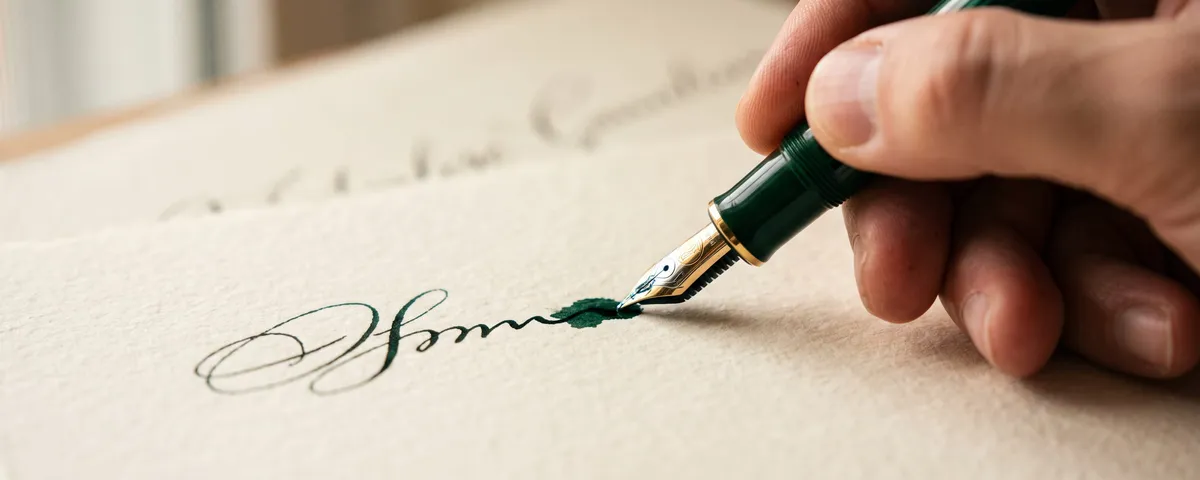
Every will gets read at the worst possible time. The person who wrote it is gone, the family is grieving, and the document has to speak clearly on its own. A will that was signed carelessly, worded loosely, or left in a drawer since 1998 does not get a second chance to explain itself. That is the standard we draft against, and it is why a document that looks simple deserves careful hands.
Wills are one piece of a broader plan, and they rarely work alone. Our estate planning overview explains how the pieces fit together. This page covers the will itself: what California requires, what the document can do, and where people most often go wrong.
What California requires for a valid will
The formal requirements come from Probate Code section 6110, and they are stricter than most people assume. A standard California will must be:
- In writing. California does not recognize oral wills, and it does not currently recognize electronic wills.
- Signed by the testator, the person making the will, or by someone else at the testator's direction and in their presence.
- Witnessed by two people, both present at the same time, who watch the signing or hear the testator acknowledge the signature, understand that the document is a will, and sign it themselves during the testator's lifetime.
Miss a formality and the will may still be admitted, but only if the person offering it proves by clear and convincing evidence that the testator intended the document to be a will. That is litigation, with attorneys on both sides, in front of a probate judge. The signing ceremony takes fifteen minutes to do correctly. We supervise every one.
Handwritten wills, and why we talk clients out of them
Probate Code section 6111 gives California a generous rule for holographic wills. If the signature and the material terms are in the testator's own handwriting, no witnesses are required at all. People hear that and reach for a legal pad.
Here is what the statute does not protect against. Undated holographic wills lose to doubt about which document came last. Handwriting has to be authenticated, sometimes through document examiners. Casual phrasing ("I want Maria to be taken care of") forces a judge to guess at intent. And because no witnesses saw the signing, claims of undue influence or shaky capacity are harder to answer. A holographic will is a fine emergency measure on the way to a real one, and a poor place for a family's future to rest.
What a will does well
Within its lane, a will is powerful. It names your beneficiaries and what each receives, whether specific gifts or shares of the whole. It appoints your executor, the person who will inventory assets, pay debts, and move the estate through court. For parents, it does something no other document can: it nominates guardians for minor children, the starting point for everything discussed on our guardianship page. A will can also forgive debts, make charitable gifts, and state your wishes for remains.
What a will cannot do
A will does not avoid probate. This is the single most common misunderstanding we correct in first meetings. If the estate exceeds California's small estate threshold, currently $208,850 for deaths on or after April 1, 2025, the will must be admitted to probate and the estate administered under court supervision. In Los Angeles County that means the Stanley Mosk Courthouse, statutory fees calculated on the gross estate, and a timeline that commonly runs nine to eighteen months, longer when anything is contested. Since nearly any home in the county exceeds the threshold by itself, homeowners who rely on a will alone are choosing probate without realizing it.
A will also has no reach over assets that pass outside it: retirement accounts and life insurance with beneficiary designations, joint tenancy property, and anything held in trust. A beautifully drafted will cannot fix a forgotten beneficiary form naming an ex-spouse. We review those designations as part of every plan.
What the pour-over will catches
Most of our clients end up with a trust-based plan, and in those plans the will takes a supporting role. A pour-over will directs anything left outside the living trust at death into the trust, so one set of instructions governs everything. It is the safety net under the plan. If an account was opened late in life and never retitled, the pour-over will catches it. It also remains the document that nominates guardians, which is why even trust-centered plans always include one.
What a no-contest clause can and cannot do
Clients worried about a challenge often ask for a no-contest clause. California enforces them, but narrowly. Under Probate Code section 21310 and the sections that follow, a no-contest clause generally applies only to certain kinds of contests, and a contest brought with probable cause is typically not penalized at all. A no-contest clause is one deterrent among several, not a shield. Thoughtful drafting, clean execution, and honest conversations during life usually do more to prevent a fight than any clause can.
Where online wills go wrong
We are not reflexively against templates. We simply read the aftermath. The do-it-yourself wills that reach our office fail in patterns: signed with one witness instead of two, or with a notary instead of witnesses, which California does not accept as a substitute. Beneficiaries who died first, with no instruction about where their share goes. Blended family situations forced into single-family language. Guardian nominations left blank because the software never pressed the question. Out-of-state forms that ignore California community property entirely.
The document is cheap. The cleanup is not. A contested or defective will can consume in court costs many multiples of what careful drafting would have cost, and it spends the family's goodwill along with its money. When we prepare a will, you sit with an attorney who asks the awkward questions first, drafts around them, and then runs a signing that leaves nothing for a judge to wonder about.
Questions clients ask about wills.
Does a will avoid probate in California?
No, and this surprises almost everyone. A will is a set of instructions for the probate court, not a way around it. If your estate is worth more than the small estate threshold (currently $208,850 for deaths on or after April 1, 2025), your family will still open a probate case at the Stanley Mosk Courthouse even with a perfectly drafted will. Families who want to keep a home out of probate usually pair the will with a living trust.
Is a handwritten will legal in California?
It can be. Probate Code section 6111 recognizes holographic wills when the signature and the material provisions are in the testator’s own handwriting. Legal is not the same as reliable, though. Handwritten wills invite disputes over dates, meaning, capacity, and missing pages, and judges see those fights regularly.
Who should I name as executor?
Someone organized, patient, and willing. The executor gathers assets, deals with creditors, files with the court, and answers to your beneficiaries for the nine to eighteen months a routine administration runs. Proximity to Los Angeles helps but is not required. Always name at least one backup, and tell the people you have chosen.
Can I disinherit someone in my will?
Generally yes, with limits. California protects a surviving spouse’s community property rights, and children omitted by accident have statutory protections that intentionally omitted children do not. If you expect hurt feelings or a challenge, the drafting choices matter, and this is a conversation to have with an attorney rather than a form.
How often should I update my will?
Review it after any marriage, divorce, birth, death, significant purchase or sale, or move into or out of California, and every three to five years even if nothing obvious has changed. Most updates are simple. The expensive problems come from wills no one looked at for twenty years.
Schedule a Consultation
Tell us a little about what you need. We will follow up within one business day to set a time that works for you.
Put a plan in place for the people you love.
A calm, unhurried conversation about your family, your home, and what happens next.