California holds dog owners strictly liable. We hold them to it.
There is no free first bite in California. If a dog bit you or your child in Los Angeles, in a public place or anywhere you had a right to be, the owner is responsible whether or not the dog ever showed aggression before. The owner's insurance pays. Getting it to pay fairly is our job.
No fee unless we win. Free, confidential case review.
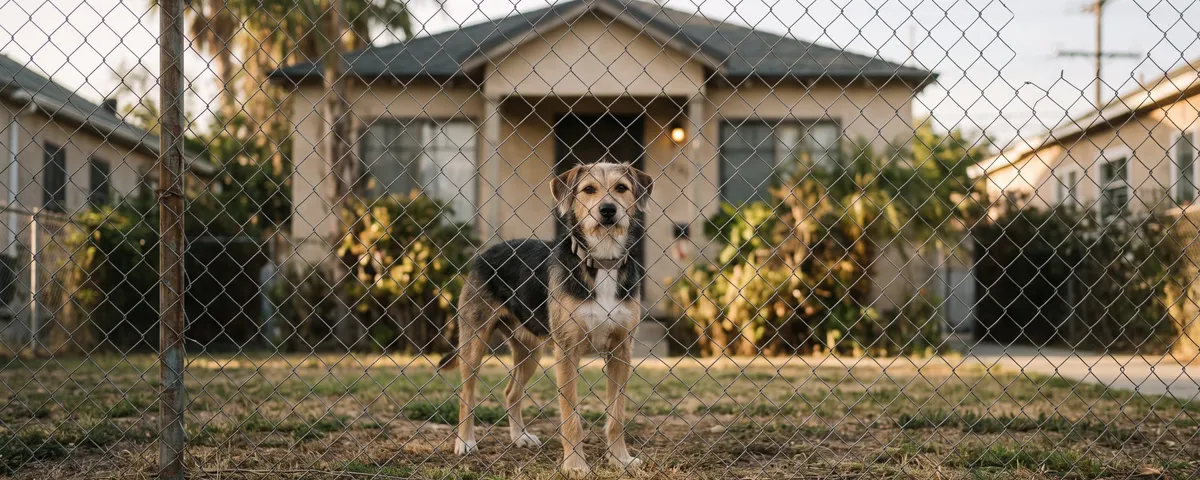
Dog bite calls to this office follow a pattern. The bite itself took seconds. The aftermath is a blur of urgent care, a rabies question nobody can answer on the spot, and an owner who was mortified at the scene but has stopped returning texts. Then a letter arrives from an insurance company you never contacted, asking for a recorded statement "to resolve this quickly." Stop there. You are being adjusted, and the numbers only move in one direction once you start talking.
Strict liability under Civil Code section 3342.
Most states once followed a "one bite rule," where an owner escaped liability the first time a dog hurt someone. California rejected that approach by statute. Civil Code section 3342 makes an owner liable for damages when a dog bites a person who is in a public place or lawfully in a private place, including the owner's own property. It does not matter that the dog never bit before. It does not matter that the owner had no reason to think it would. There is no negligence to prove and no "he was always so gentle" defense to argue. Ownership plus a bite plus a lawful location equals responsibility.
Note the two conditions built into the statute. First, it covers owners; claims against a person who was merely walking or watching the dog proceed on negligence principles instead. Second, it covers bites. When a dog knocks someone down or causes a cyclist to crash, we bring the claim as ordinary negligence, often supported by a local leash ordinance.
How far the exceptions actually stretch.
Owners and insurers reach for three escape hatches. Trespassers are outside the statute, so an owner may argue the injured person had no right to be where the bite happened; that defense fails when you were an invited guest, a delivery driver on a walkway, or a passerby on the sidewalk. Police and military dogs performing official duties are exempt under conditions set by statute. And provocation: California treats a claim that the victim provoked the dog as comparative fault, a percentage argument rather than a complete defense. Juries are rightly skeptical of provocation claims aimed at small children, and very young children are generally not held to an adult standard of care at all.
The real payer is an insurance policy.
People wait to call a lawyer because the owner is a neighbor, a relative, a friend from the dog park. Understand how these claims actually resolve: homeowner's and renter's policies typically cover dog bite liability, and the claim is negotiated with an insurance adjuster, not across a backyard fence. The owner's role is usually limited to reporting the incident to their carrier. Refusing to make a claim does not protect your neighbor. It just moves the cost of their dog's behavior onto your family.
Where no policy exists, we look wider. A bite at a rented house raises landlord questions. A bite at a business raises premises questions, the same ones we litigate in our slip and fall cases. An attack by a working dog or a dog in a commercial kennel raises employer and business coverage. Somebody almost always insures the risk.

Children carry the worst of it.
Children are bitten more often than adults, and because of their height the wounds land on faces, scalps, and hands. A facial bite is not a single medical event. It can mean plastic surgery now, revision procedures after the child finishes growing, scar treatment for years, and counseling for a fear of dogs that follows a kid through every park and every friend's house. California law accounts for this: a minor's settlement must be approved by a court through a minor's compromise proceeding, and the statute of limitations for the child's own claim is generally tolled during minority. We build these cases around the full treatment horizon, the same discipline we bring to catastrophic injury claims, because a settlement that covers only the first surgery shortchanges the child who has to live with the scar.
When a landlord shares responsibility.
Landlords are not insurers of their tenants' pets, but California case law holds a landlord liable when the landlord actually knew a tenant's dog was dangerous and had the legal ability to remove the animal, for example by enforcing the lease, yet did nothing. Prior complaints to a property manager, warnings from other tenants, and earlier animal control reports become the spine of that case. This matters most when the owner is uninsured and the landlord's policy is the only realistic source of recovery.
Report the bite, then document everything.
Bites in Los Angeles County are reported to the county's Department of Animal Care and Control, or to Los Angeles Animal Services for incidents inside the city. The report triggers a rabies quarantine and creates an official record identifying the dog and its owner, which matters enormously if the owner later becomes hard to find or changes their story. Photograph the wounds as they heal, every week, in good light. Keep the clothing. Get the names of witnesses at the scene. Then bring it all to us. The consultation is free, and like every case in our injury practice, there is no fee unless we win. The deadline for an adult's claim is generally two years from the bite.
Strict liability, children, and the neighbor's dog.
The dog belongs to a neighbor I like. Do I have to sue them personally?
In almost every case the claim is paid by the owner's homeowner's or renter's insurance, not out of their pocket. The demand goes to an insurance company and an adjuster negotiates it. A lawsuit naming the owner is sometimes necessary to move the insurer, but even then the defense and any settlement are typically funded by the policy. Many of our dog bite clients stay on good terms with the owner throughout.
Will the dog be put down if I make a claim?
A civil injury claim does not decide the dog's fate. Dangerous animal proceedings are separate, handled by animal control authorities and, in serious cases, a hearing process. Most bites result in a rabies quarantine and a report, not euthanasia. Your claim is about your medical bills and scarring, and pursuing it does not require you to seek anything against the animal.
The dog did not bite me. It jumped on me and I fell. Do I have a case?
Possibly, but under a different theory. California's strict liability statute covers bites. A knockdown, a chase into traffic, or a scratch proceeds as an ordinary negligence claim, where we show the owner failed to use reasonable care in controlling the animal, for example by violating a leash law. Those cases are winnable. They simply take more proof.
What is a dog bite case worth when the scars are on my child's face?
Scarring cases are valued around the future, not just the emergency room bill. That includes revision surgeries that may wait until the child stops growing, laser treatment, and the lifelong effect of a visible facial scar. No number can be promised in advance, and we would not trust anyone who promises one. What we can say is that insurers price scar cases far higher when a firm documents the future treatment plan before settling.
Start your free dog bite case review.
Three quick questions. No cost, no obligation, and no fee unless we win.
Hurt in an accident? Talk to us today.
The call is free. The case review is free. You pay nothing unless we win for you.