A Los Angeles truck accident law firm that moves as fast as the carrier does.
Within hours of a serious truck crash, the carrier's investigators and defense lawyers can be at the scene. The evidence race starts immediately. If a commercial truck hit you or someone you love, call us today, not next month.
No fee unless we win. Free, confidential case review.
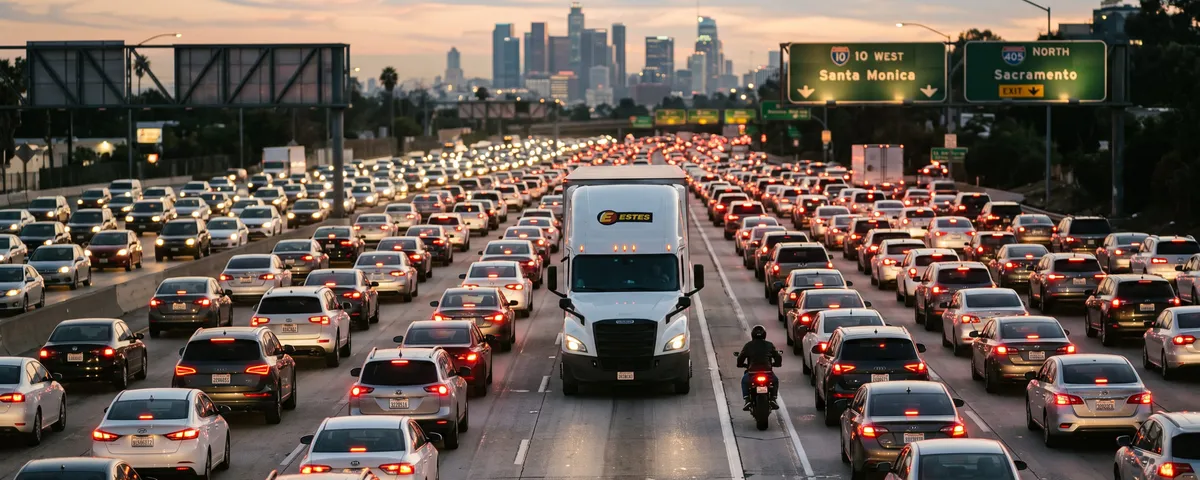
Freight runs through this county every hour of every day.
Los Angeles is the largest freight gateway in the country. Cargo leaves the ports and moves up the 710, spreads across the 60 through the warehouse corridors of the San Gabriel Valley, and rolls north on the 5 past downtown, Burbank, and the Newhall Pass. Closer to our office, the 134 interchange through Glendale carries commercial traffic between the 5 and the 210 all day. More trucks means more truck crashes, and when 80,000 pounds meets a passenger car, the physics are not close.
These cases are not car accident cases with a bigger vehicle. A commercial carrier is a regulated business. Its driver holds a commercial license. Its trucks carry data recorders. Its insurance is layered in the millions. And its response to your crash is professional, immediate, and adverse to you.
The federal rulebook works in your favor.
Interstate carriers answer to the Federal Motor Carrier Safety Administration. FMCSA hours-of-service rules cap driving time and require rest breaks because fatigued truckers kill people. Separate regulations require systematic inspection, repair, and maintenance of every truck and trailer, with records to prove it. Brake violations and worn tires show up again and again in roadside inspection data.
When a carrier breaks these rules, the violation becomes powerful evidence of negligence. We compare the driver's logs against fuel receipts, GPS data, and delivery schedules to find the hours the logbook left out. We pull the carrier's federal safety history. A crash that looks like simple driver error often turns out to be a business decision: a schedule no one could legally meet, a maintenance ticket no one closed.
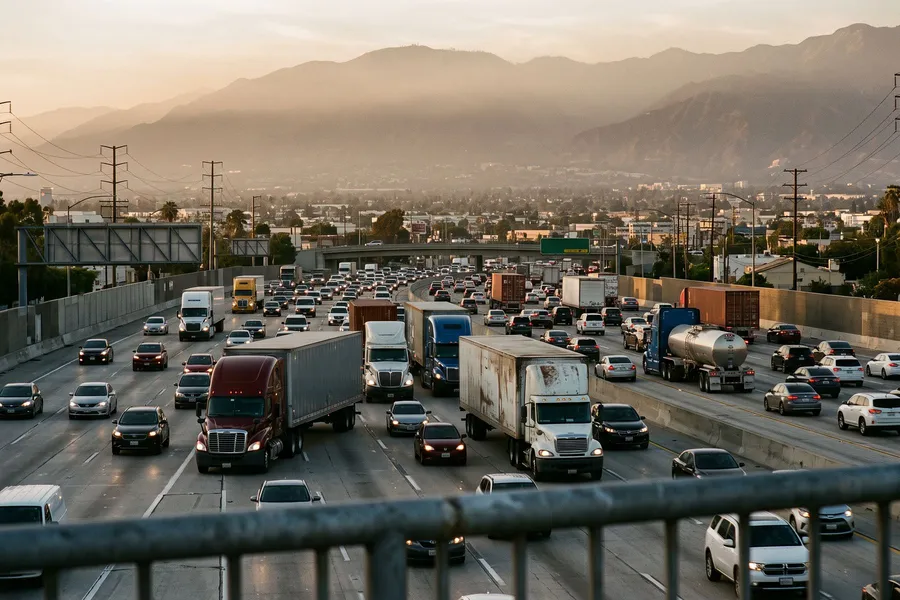
The truck records its own crash. Preserve that data.
Modern commercial trucks carry electronic logging devices that record driving hours, and engine control modules that capture speed, braking, and throttle in the seconds before a collision. Dash cameras are increasingly standard. Dispatch systems log every communication. This is the evidence that proves what happened, and none of it belongs to you.
That is why our first move in every truck case is a spoliation letter: a formal preservation demand served on the carrier and its insurer identifying the driver files, logs, electronic data, maintenance records, and post-crash inspection reports that must be kept. Absent that demand, data can be overwritten and trucks can be repaired or sold in the ordinary course of business. With it, destruction of evidence carries consequences a jury is allowed to hear about.
Expect a rapid response team. Bring your own.
Large carriers and their insurers maintain crash response programs. Investigators can reach a scene while the road is still closed, photographing, measuring, and interviewing before the injured person is out of the emergency room. Carriers run these programs as standard practice, because early control of the evidence shapes the outcome. The counterweight is a law firm that starts just as fast: scene inspection, preservation demands, witness statements, and reconstruction professionals retained before the trail goes cold.
Layered insurance and every defendant who belongs in the case.
Federal law requires most interstate carriers to maintain at least $750,000 in liability coverage, and many carry primary policies of $1 million or more with excess and umbrella layers stacked above them. Compare that to the $30,000 minimum on a private car, and you see why identifying every policy matters so much in a catastrophic injury case. We trace coverage through the carrier, the tractor owner, the trailer owner, and the shipper where the facts support it.
Liability stacks the same way. A carrier is vicariously responsible for its driver's negligence on the job. Beyond that, carriers face direct claims for negligent hiring, retention, and supervision: the driver with a history of violations who was hired anyway, the failed drug test that never triggered action, the training that existed only on paper. Maintenance contractors and cargo loaders can share fault when brakes fail or loads shift.
Truck crash injuries are frequently the kind we handle in our catastrophic injury practice: brain trauma, spinal damage, crush injuries. When a crash is fatal, the family's rights are addressed through a wrongful death claim. And where the collision facts overlap with an ordinary car accident claim, the deadlines do too: two years for most claims, six months when a government entity is involved. Our personal injury overview covers those rules in detail.
Every truck case here is handled on contingency. No fee unless we win, and the resources to take on a carrier are ours to advance, not yours.
Answers before the carrier's adjuster calls.
Why is a truck accident case different from a car accident case?
Three reasons. The injuries tend to be worse, the defendant is a business with federal safety obligations, and the insurance runs far deeper than a personal auto policy. All three change how the case must be built, and how fast. The carrier starts investigating within hours. You should too.
Who can be held responsible after a truck crash?
Often more than the driver. The motor carrier is generally responsible for its driver's on-the-job negligence, and can face separate claims for negligent hiring, training, or supervision. Depending on the facts, the trailer owner, a maintenance contractor, a freight broker, or a cargo loader may share liability.
What is a spoliation letter and why does timing matter?
It is a formal demand that the trucking company preserve evidence: driver logs, electronic control module data, inspection records, dispatch communications. Some of this data can be overwritten in the ordinary course of business. Once a preservation letter is served, destroying that evidence carries legal consequences.
How long do I have to bring a truck accident claim in California?
Two years for most injury claims under Code of Civil Procedure section 335.1, and six months for a government claim if a public entity is involved. But the practical deadline is much shorter, because the evidence that wins these cases starts disappearing in the first weeks.
Start your free truck accident case review.
Three quick questions. No cost, no obligation, and no fee unless we win.
Hurt in an accident? Talk to us today.
The call is free. The case review is free. You pay nothing unless we win for you.