Los Angeles motorcycle accident attorneys who ride against the bias.
Every rider knows the assumption: the motorcyclist must have been reckless. Insurers price that assumption into every offer. We build motorcycle cases on physical evidence, and we make adjusters argue with facts instead of stereotypes.
No fee unless we win. Free, confidential case review.
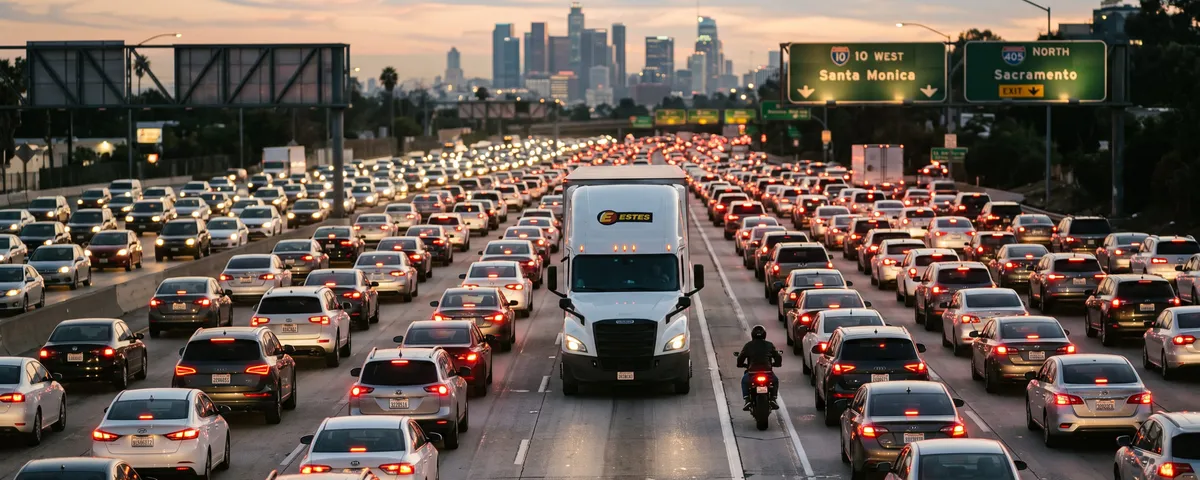
Lane splitting is legal here. Insurers act like it is not.
California is the only state that has fully legalized lane splitting by statute. Assembly Bill 51 added Vehicle Code section 21658.1 in 2016, defining lane splitting and authorizing the CHP to publish safety guidelines for it. Riding between lanes of traffic is lawful. Full stop.
Yet in claim after claim, the adjuster's opening position treats a splitting rider as presumptively at fault. The argument works on unrepresented riders because it sounds official, but no statute says any such thing. The legal question is ordinary negligence: was the rider's speed and position reasonable, and did the driver check mirrors and signal before moving? A driver who drifts across a lane line into a lawful rider has a problem, and we make sure the file reflects it.
How the bias actually shows up in a claim.
Rider bias is rarely stated outright. It shows up as an inflated comparative fault number, a "speed unknown but likely excessive" note in the adjuster's file, or a lowball offer justified by nothing. It shows up when the driver's story gets accepted and the rider's gets discounted, because the rider left in an ambulance and never gave a statement. California's pure comparative negligence rule means every percentage point matters: fault assigned to you comes straight out of your recovery. So we fight over those percentages with evidence. Gouge marks, helmet damage, throttle position data where available, sight line photographs, and reconstruction analysis, not vibes.
Where Los Angeles riders go down.
The most common serious crash we see is the left-turning driver. A car waiting to turn across traffic misjudges a motorcycle's speed and distance, or never registers the single headlight at all, and turns directly into the rider's path. Intersections across Los Angeles produce this crash daily. The rider has the right of way. The driver says the bike came out of nowhere. The physical evidence says otherwise, if someone preserves it.
The second pattern lives in the canyons. Angeles Crest Highway climbs out of La Cañada Flintridge minutes from our Glendale office, and it draws riders every weekend, along with drivers who cut corners across the centerline and road conditions the county does not always maintain. Canyon crashes raise their own issues: no witnesses, delayed emergency response, and sometimes a government claim when a road defect played a role. A crash on Angeles Crest is not automatically rider error, whatever the first report says.
What the helmet law does and does not do.
Vehicle Code section 27803 requires every rider and passenger to wear a compliant helmet. Riding without one is a violation, and it can reduce recovery for head injuries under comparative fault. What it cannot do is erase a claim. Fault for causing a crash and fault for the extent of injury are separate questions, and a missing helmet has no bearing on a shattered wrist or a crushed leg. Insurers blur that line. Courts do not.
Motorcycle injuries demand bigger numbers.
A rider has no steel cage, no airbags, no crumple zone. The result is that motorcycle cases skew toward the injuries our catastrophic injury practice exists for: traumatic brain injury, spinal cord damage, degloving, amputation. Valuing these cases means projecting a lifetime of care, lost earning years, and the daily cost of a body that no longer works the way it did. We build that proof with treating physicians and life care planning, because a settlement that runs out in five years is a failure.
The mechanics of the claim follow the same California framework as a car accident case: two years to file under Code of Civil Procedure section 335.1, six months for government claims, and uninsured motorist coverage as the backstop when the driver carries a minimum policy. The framework is the same. The stakes are usually higher. Riders share the road's vulnerabilities with the cyclists we also represent, and the full picture of our practice is on the personal injury overview.
No fee unless we win. Bring us the crash, the bike, and the gear. We will tell you honestly what you have.

Lane splitting, helmets, and adjuster bias.
I was lane splitting when the crash happened. Do I still have a case?
Very likely yes. Lane splitting is legal in California under Vehicle Code section 21658.1. The question is whether each party rode or drove with reasonable care, not whether you were between lanes. Adjusters routinely treat splitting as automatic fault. That position does not hold up, and we do not accept it.
I was not wearing a helmet. Does that end my claim?
No. California requires helmets under Vehicle Code section 27803, and riding without one can affect a claim, but only as to injuries a helmet would have prevented, and only as a percentage under comparative fault. A broken leg has nothing to do with a helmet. Do not let anyone tell you the claim is dead.
The driver says they never saw me. Does that hurt my case?
It usually helps it. Drivers have a duty to see what is there to be seen. A rider with a headlight on, in daylight, in a marked lane, was visible. "I did not see the motorcycle" is often an admission of inattention, and we treat it that way.
What is a motorcycle injury claim worth?
Rider injuries tend to be severe: fractures, road rash requiring grafts, shoulder and spine damage, head trauma. Value follows the medical picture, the wage loss, and the permanence of the harm. We do not quote numbers before the facts are in, and no honest lawyer does.
Free case review for injured riders.
Three quick questions. No cost, no obligation, and no fee unless we win.
Hurt in an accident? Talk to us today.
The call is free. The case review is free. You pay nothing unless we win for you.