Los Angeles bicycle accident attorneys. We enforce your full rights to the road.
Drivers treat cyclists as obstacles. California law treats them as traffic, with the same rights as anyone behind a wheel. When a driver's carelessness puts you on the pavement, we make those rights cost something.
No fee unless we win. Free, confidential case review.
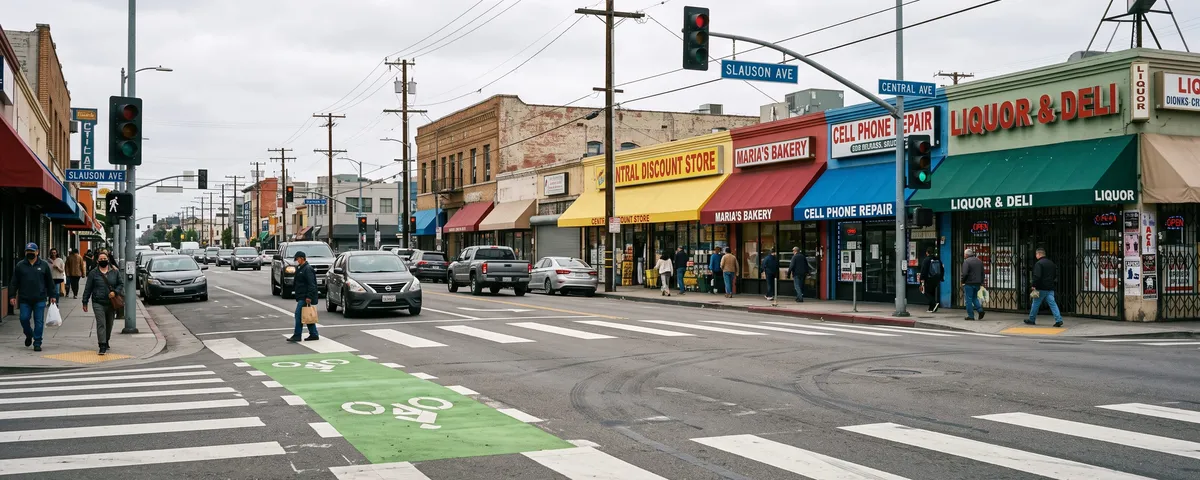
The law is on the rider's side. In writing.
Start with the statute drivers have never read. Vehicle Code section 21200 gives a person riding a bicycle all the rights of a vehicle driver on California roads. Not partial rights. Not permission to be there if convenient. The same rights. A cyclist in the lane is traffic, and a driver who treats the rider as an obstruction has the law backwards.
The Legislature has kept building on that foundation. The Three Feet for Safety Act, Vehicle Code section 21760, requires a driver overtaking a cyclist to leave at least three feet of clearance, and to slow down and pass only when safe if three feet is not available. Vehicle Code section 22517 makes dooring a violation: no one may open a door on the traffic side of a parked car unless it is reasonably safe to do so. Each of these statutes matters in a claim, because a driver who violated one was negligent in a way we can prove with a citation to the code, not just an argument.
The crashes we see most on LA streets.
Dooring is the classic. A parked driver flings a door across a bike lane and the cyclist has a fraction of a second to choose between the door and traffic. Right hooks come next: a driver overtakes a cyclist and turns right across their path at the intersection or driveway. Close passes force riders into curbs and parked cars. And blocked bike lanes, the delivery truck, the rideshare pickup, the contractor's cones, push cyclists into mixed traffic where the next hazard is waiting. When an obstruction caused you to swerve into harm, the person who created the obstruction belongs in the liability picture too.
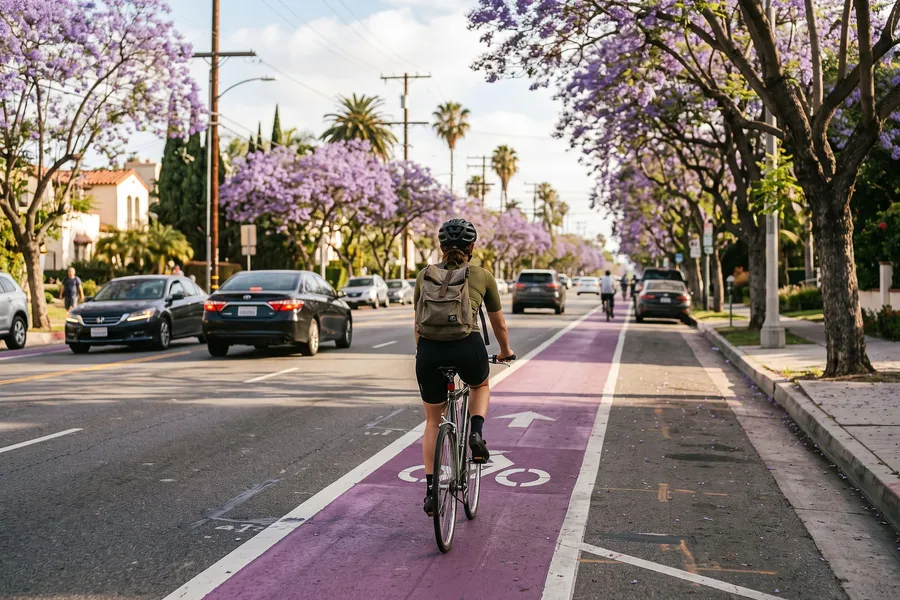
No helmet does not mean no case.
Adjusters raise the helmet question in almost every bicycle claim, and riders assume it is fatal. It is not. California law does not require adults to wear bicycle helmets at all; the helmet statute, Vehicle Code section 21212, applies to riders under 18. For an adult, riding bareheaded breaks no law.
At most, helmet non-use is a comparative fault argument, and a narrow one. The insurer must show a helmet would have reduced the specific head injury claimed, usually through medical or biomechanical testimony, and even then the result is a percentage reduction under California's pure comparative negligence rule, not a bar to recovery. Helmet arguments have exactly nothing to say about a broken collarbone, a shattered hand, or road rash. We hold adjusters to that line.
When the road itself did the damage.
Not every bike crash involves a driver. Sunken utility trenches, pavement lips, longitudinal cracks that swallow a road tire, missing grates. When a hazard like that causes a crash, the claim may run against the city or county responsible for the road as a dangerous condition of public property. These cases demand early action twice over: the government claim deadline is generally six months under Government Code sections 911.2 and 945.4, and road defects get paved over, sometimes with remarkable speed once someone is hurt. Photograph the defect with scale references the day of the crash if you possibly can.
Evidence wins bicycle cases. Keep everything.
A bicycle case is built from physical proof. The bike, unrepaired. The cracked helmet, the torn clothing, the scraped shoes. Your GPS ride data, which can show speed and position at impact. Camera footage from the businesses and doorbells along the block, which we request immediately because retention windows are short. Witness contacts. Photographs of the scene, the vehicle, and the injuries. Bring all of it to the consultation, and if you are still at the scene reading this, photograph first and move the bike second.
From there the claim follows the roadway playbook we use across the practice: liability workup, insurer contact handled by us, treatment documented through settlement or suit. The deadlines match our car accident cases, two years under Code of Civil Procedure section 335.1 for most claims. The vulnerability dynamics echo what our pedestrian accident clients face, and the fight against rider bias parallels our motorcycle practice. The whole picture lives on the personal injury overview.
No fee unless we win, and the first conversation is free. Call (424) 626-6222 before the insurer writes the story without you.
Helmets, bike lanes, and who pays for the bike.
The driver's insurer says I should not have been in the traffic lane. Are they right?
Almost certainly not. Vehicle Code section 21200 gives cyclists the rights of vehicle drivers, and cyclists may leave the edge of the road or a bike lane to avoid debris, parked car doors, and other hazards, or when the lane is too narrow to share safely. Position in the lane is rarely the fault argument insurers pretend it is.
I was not wearing a helmet. Can the insurance company deny my claim?
No. California does not require adults to wear bicycle helmets; Vehicle Code section 21212 applies to riders under 18. For adults, helmet non-use is at most a comparative fault argument, limited to head injuries a helmet would have reduced, and the insurer bears the burden of proving that. It never erases a claim.
A parked driver opened a door into me. Who is at fault?
The person who opened the door, in nearly every case. Vehicle Code section 22517 prohibits opening a door on the traffic side unless it is reasonably safe and can be done without interfering with moving traffic. Dooring cases are among the clearest liability pictures in bicycle law.
I crashed because of a pothole or broken pavement. Is there any claim?
Possibly, against the public entity responsible for the road. Dangerous condition claims require proof the entity knew or should have known of the hazard, and a written government claim is generally due within six months. Photograph the defect immediately, exactly as it was when you crashed.
What is my bike case worth if my bicycle was expensive?
The bicycle is property damage and fully claimable, but the injury drives the value: medical care, time off work, and lasting limitations. Keep the damaged bike and components unrepaired until they are documented. They are evidence of impact forces as well as a loss.
Tell us about your bike crash.
Three quick questions. No cost, no obligation, and no fee unless we win.
Hurt in an accident? Talk to us today.
The call is free. The case review is free. You pay nothing unless we win for you.