Los Angeles pedestrian accident lawyers for people hit while walking.
You had the right of way. The driver had two tons of steel. Now you are the one in the hospital, and the insurer is already looking for a reason to blame you. Do not carry this alone. The case review is free.
No fee unless we win. Free, confidential case review.
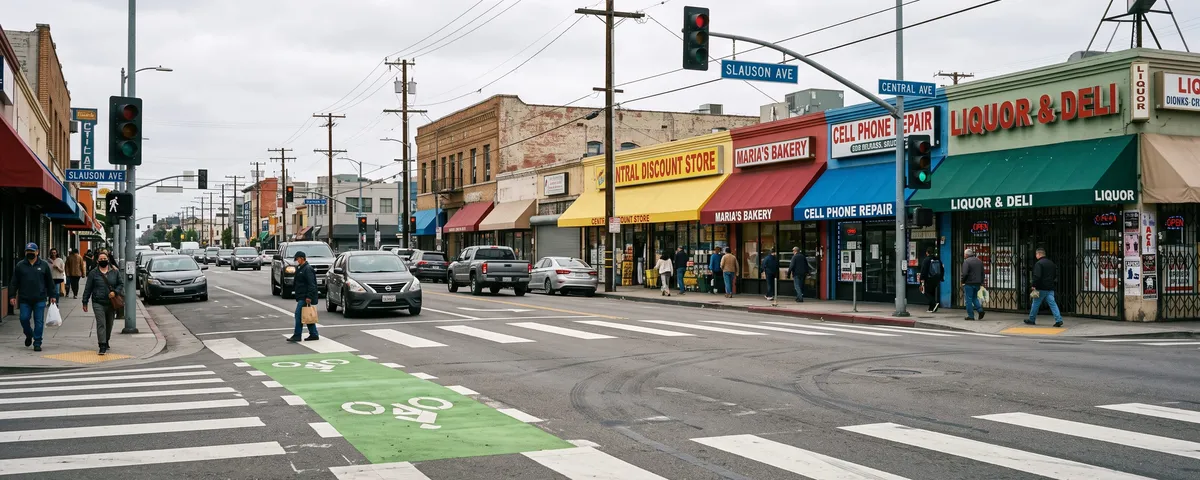
Walking in this city carries real risk.
Los Angeles is built around the car, and people on foot pay for it. Year after year, pedestrians make up a strikingly large share of the county's serious traffic injuries and deaths, far out of proportion to how much of the traffic they represent. Wide boulevards, long blocks, fast signal timing, and drivers looking at phones combine into a predictable result at crossings from downtown to the Valley.
When a pedestrian case comes through our door, the injuries are almost never minor. There is no bumper between a human body and the pavement. Broken hips and legs, head trauma, internal injuries, and long rehabilitation are the norm, which means the claim has to be built for the full scope of the harm, not the first hospital bill.
The right of way is broader than the painted lines.
Vehicle Code section 21950 requires drivers to yield to a pedestrian crossing within any marked crosswalk, and within any unmarked crosswalk at an intersection. That second clause surprises people. Where two roads meet, an unmarked crosswalk generally exists as the extension of the sidewalk lines, paint or no paint. A driver who plows through one has violated the statute just as surely as if the crossing had zebra stripes.
The statute also tells drivers to slow down and exercise care whenever a pedestrian is in the roadway. Pedestrians have duties too, and adjusters lean hard on them: the claim that you darted out, that you were outside the lines, that the walk signal had expired. California's pure comparative negligence rule means those arguments reduce a recovery rather than end it. We contest the percentage with signal timing data, scene measurements, and witness accounts, because in a serious injury case every percentage point is real money.
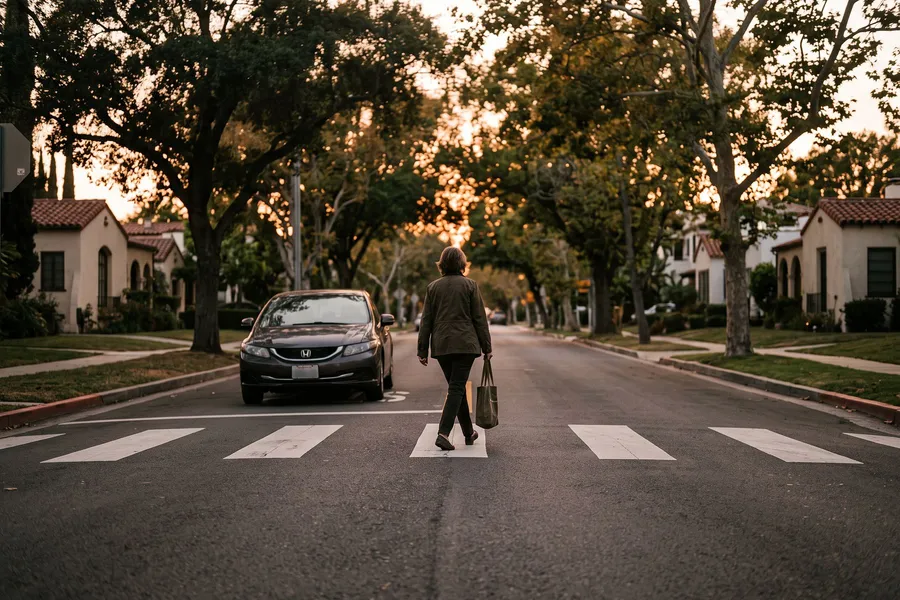
The coverage that steps in after a hit and run.
A shameful number of Los Angeles pedestrian crashes end with the driver gone. The first track of the case is identification: traffic and doorbell cameras, bus cameras, license plate fragments from witnesses, and vehicle debris left at the scene. Police follow some of these leads. We follow all of them.
The second track is coverage, and it exists whether or not the driver is ever found. Uninsured motorist coverage on your own auto policy, or on a policy in your household, generally applies when you are struck as a pedestrian by a hit and run or uninsured driver. People assume being on foot puts them outside their car insurance. It usually does not. Prompt police reporting and notice to the insurer protect these claims, which is one more reason to involve a lawyer early.
Sometimes the crossing itself is the defendant.
Certain intersections hurt people over and over. Burned out street lighting, a crosswalk with no signal on a road built for speed, overgrown sight lines, a history of prior crashes the city knew about. California law allows claims against a public entity for a dangerous condition of public property, and those claims can run alongside the claim against the driver. The trade-off is procedure: a written government claim is generally due within six months under Government Code sections 911.2 and 945.4, long before the two-year deadline of Code of Civil Procedure section 335.1 that governs the ordinary injury claim. We calendar both from day one.
Built like our other roadway cases and scaled to the injuries.
The investigation playbook here mirrors what we do in a car accident case: preserve camera footage fast, document the scene, take over insurer contact, and line up medical care on a lien when needed. Because pedestrian injuries trend severe, these files often overlap with our catastrophic injury work, where future care costs drive the number. Cyclists face many of the same dynamics, and our bicycle accident practice handles them daily. For deadlines, damages, and the whole map of what we do, start at the personal injury overview.
You pay nothing up front and no fee unless we win. Call (424) 626-6222 and get an honest read on your case today.
Your rights in the crosswalk and out of it.
I was not in a marked crosswalk. Can I still recover?
Often, yes. California recognizes unmarked crosswalks at most intersections, where pedestrians keep the right of way under Vehicle Code section 21950. Even outside any crosswalk, drivers owe a duty of care, and under comparative negligence a pedestrian who shares fault can still recover a reduced amount.
The driver took off. Who pays for my injuries?
Start with your own auto policy. Uninsured motorist coverage typically applies to a hit and run even though you were on foot, and it can cover injured household members too. We also work to identify the driver through cameras, witnesses, and paint transfer evidence. Report the crash to police immediately; a prompt report matters for these claims.
The city knew this intersection was dangerous. Does that matter?
It can matter a great deal. A public entity can be liable for a dangerous condition of public property, such as a crossing with broken lighting, missing signals, or sight obstructions. These claims carry a six-month deadline under the Government Claims Act, so they must be evaluated early.
What should I do in the first days after being hit?
Get complete medical care and follow through on it. Keep the clothes and shoes you were wearing. Write down everything you remember while it is fresh. Do not give the driver's insurer a recorded statement. Then talk to a lawyer, before the adjuster shapes the story without you.
Tell us what happened at the crossing.
Three quick questions. No cost, no obligation, and no fee unless we win.
Hurt in an accident? Talk to us today.
The call is free. The case review is free. You pay nothing unless we win for you.